“For us, prefab isn’t just about speed, it’s about alignment, accountability, and delivering a higher-quality product.”
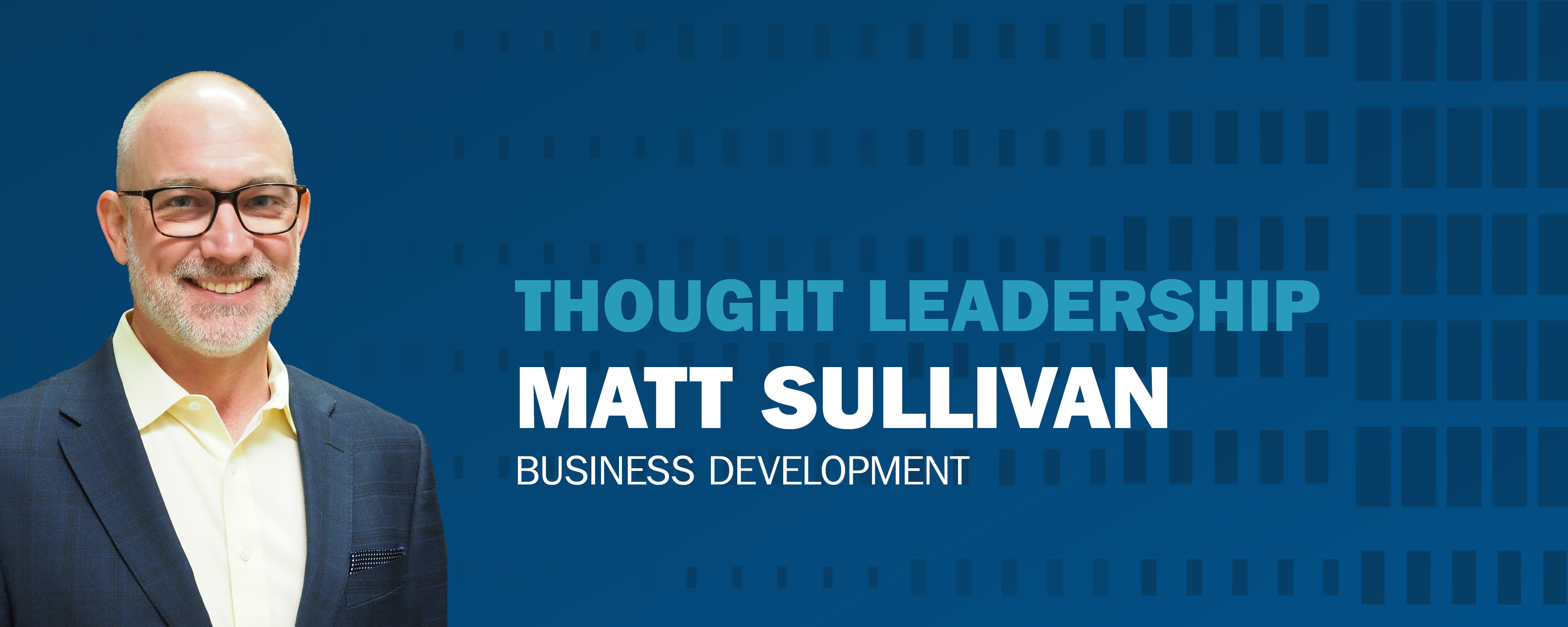
Matt Sullivan Reflects on Culture, Strategy, and the Power of Prefab
Matt Sullivan brings strategic clarity and deep prefab expertise to his role leading Business Development (BD) at DBC. In this Q&A, he shares insights on industry misconceptions, AI’s impact, and how DBC is shaping the future of construction.
What are you most proud of at DBC?
Matt: Since joining DBC a year ago, I’ve seen a major shift in how we approach business development. We’ve become more strategic and disciplined, pursuing the right type of work that truly fits our business model rather than chasing volume. That shift has already paid off. Industry research shows that companies with a focused BD strategy can double their win rates compared to less selective peers. By aligning pursuits with our prefab strengths, we’re building smarter, not just bigger, and that makes me proud.
What do you think is a common misconception about prefabrication that you’d like to clear up?
Matt: A lot of people assume prefab is prefab, that one product is the same as another. But not all prefab is created equal. Even if two companies are producing similar scope, the methods, details, and quality can vary dramatically. This makes coordination critical. Everyone, design, estimating, and operations, has to fully understand the scope of the prefab products chosen, or scope gaps can creep in. At DBC, we’re intentional about eliminating those risks. For us, prefab isn’t just about speed, it’s about alignment, accountability, and delivering a higher-quality product.
How do you see prefabrication evolving in the next 5-10 years, especially in healthcare and data centers?
Matt: AI is going to be a game changer. From streamlining estimating and prefab design to optimizing procurement, AI has the potential to cut preconstruction hours by 30% while boosting accuracy. That’s especially relevant in healthcare and data centers, two sectors where speed, precision, and scalability matter most. With healthcare spending projected to exceed $60 billion annually by 2028 and data center demand growing at 11% per year through 2032, there’s a huge opportunity for DBC to leverage AI in prefab and capture more market share.
What excites you the most about prefabrication construction?
Matt: I love seeing people who have only worked with traditional methods “light up” once they see the positive impact prefab can have. That moment when the lightbulb goes off, and they fully embrace the process, that’s exciting. It’s not just about shaving weeks off a schedule. Prefab can reduce material waste by up to 40%, improve quality consistency by 70%, and significantly reduce risk on site. Those are real-world benefits that change the way projects get delivered.
What’s your favorite data center project and why?
Matt: I’d have to say the Abilene Data Center project. Not only because of its scale, but because of the way the DBC team came together. We committed to one another and executed at a level we hadn’t achieved before. In mega-projects like data centers, team cohesion is everything. Research shows collaborative project teams are 20% more likely to deliver on schedule. That’s exactly what we accomplished in Abilene, and it set a new bar for us going forward.
What drew you to business development in construction?
Matt: I’m a people person, but I’m also a strategic thinker. About 15 years ago, I was working as a project manager in a role where I was both a “do-er” and a “seller.” I enjoyed both aspects, but I naturally gravitated toward the “get work” side of things. That balance, relationships paired with strategy, is what business development is all about. And research confirms it: relationship-driven BD professionals achieve nearly 50% higher client retention than transactional sellers.
What excites you most about the evolution of prefabrication in commercial construction?
Matt: The safety impact. Every hour we can move off the jobsite and into a controlled environment is an hour that reduces exposure to risk. Studies show prefab can cut onsite accidents by up to 20%. And with the industry facing a shortfall of half a million skilled workers in 2025, prefabrication is also a practical solution. It allows us to do more with less while keeping people safer.
From Advanced Tech to Healthcare projects, how do you tailor prefab strategies to different building types?
Matt: The opportunities themselves tell you the strategy, if you listen. Every building type has its own drivers. For example, for healthcare projects prefab headwalls, MEP racks, and bathroom pods speed up delivery while minimizing infection risks in sensitive environments. For data centers, scalability and repeatability are everything, so prefab hot aisle containments (HACs), racks and panels become the focus. The key is putting yourself in the client’s shoes and tailoring the prefab approach to what matters most for their project.
What’s your favorite thing about working at DBC?
Matt: The culture. I’ve worked for publicly traded companies and for family-owned ones. DBC, as part of DPR, is the best of both worlds. We have the resources and stability of a large organization, but we also have the familiarity and authenticity of a family-owned company. Everyone has a voice here. And when employees feel heard, studies show they’re over four times more likely to be engaged and empowered. That’s what makes our culture stand out.
How do you collaborate across teams to align business development with execution?
Matt: I always start with the end in mind: What are we trying to achieve? From there, I build a roadmap and bring in the right people at the right time. It’s never “my project” or just “the operations team’s project”, it’s our project. That mindset creates accountability across the board. And when all departments align from day one, projects can finish 15% faster and 10% more cost-efficient than traditional approaches.