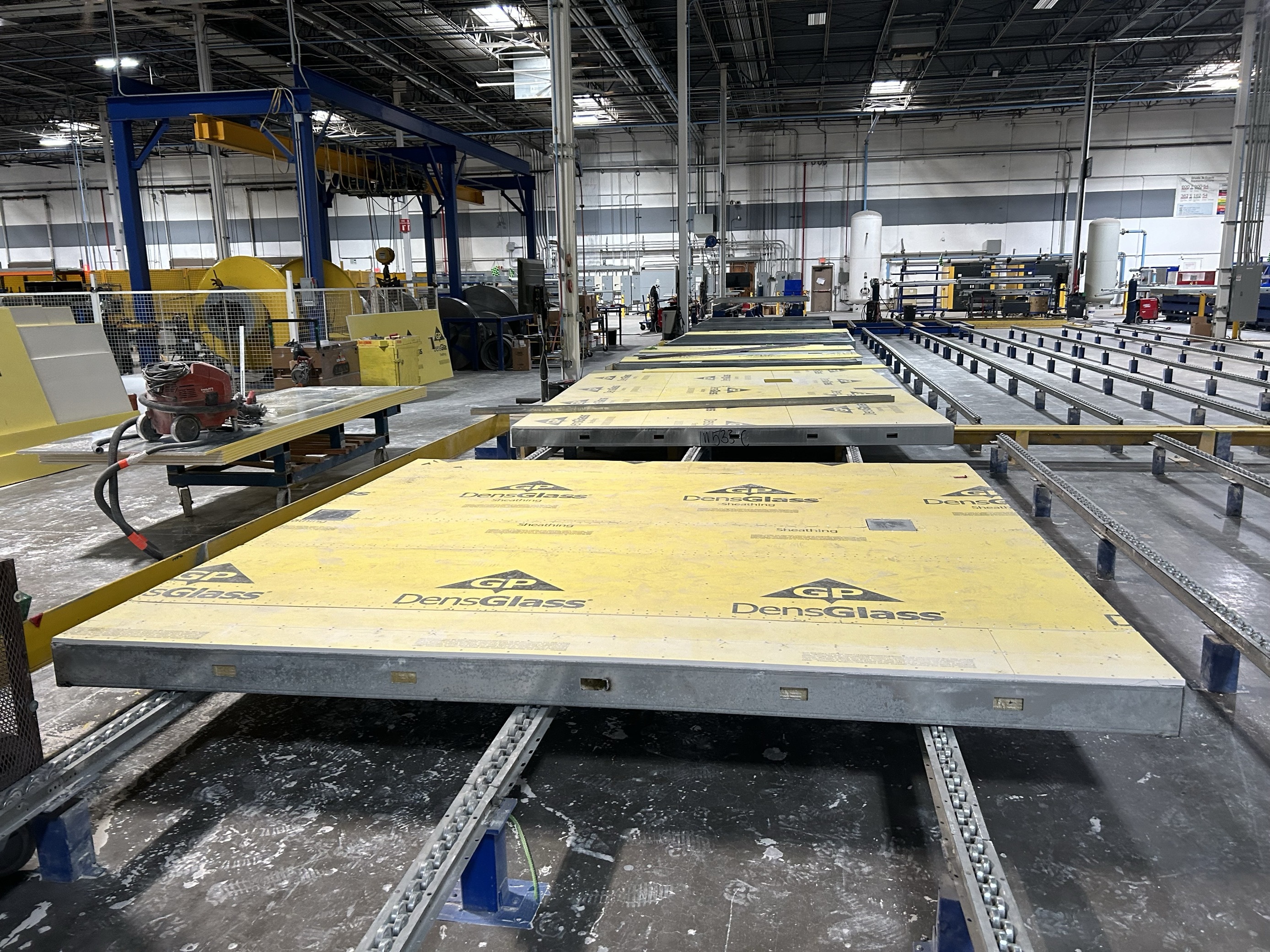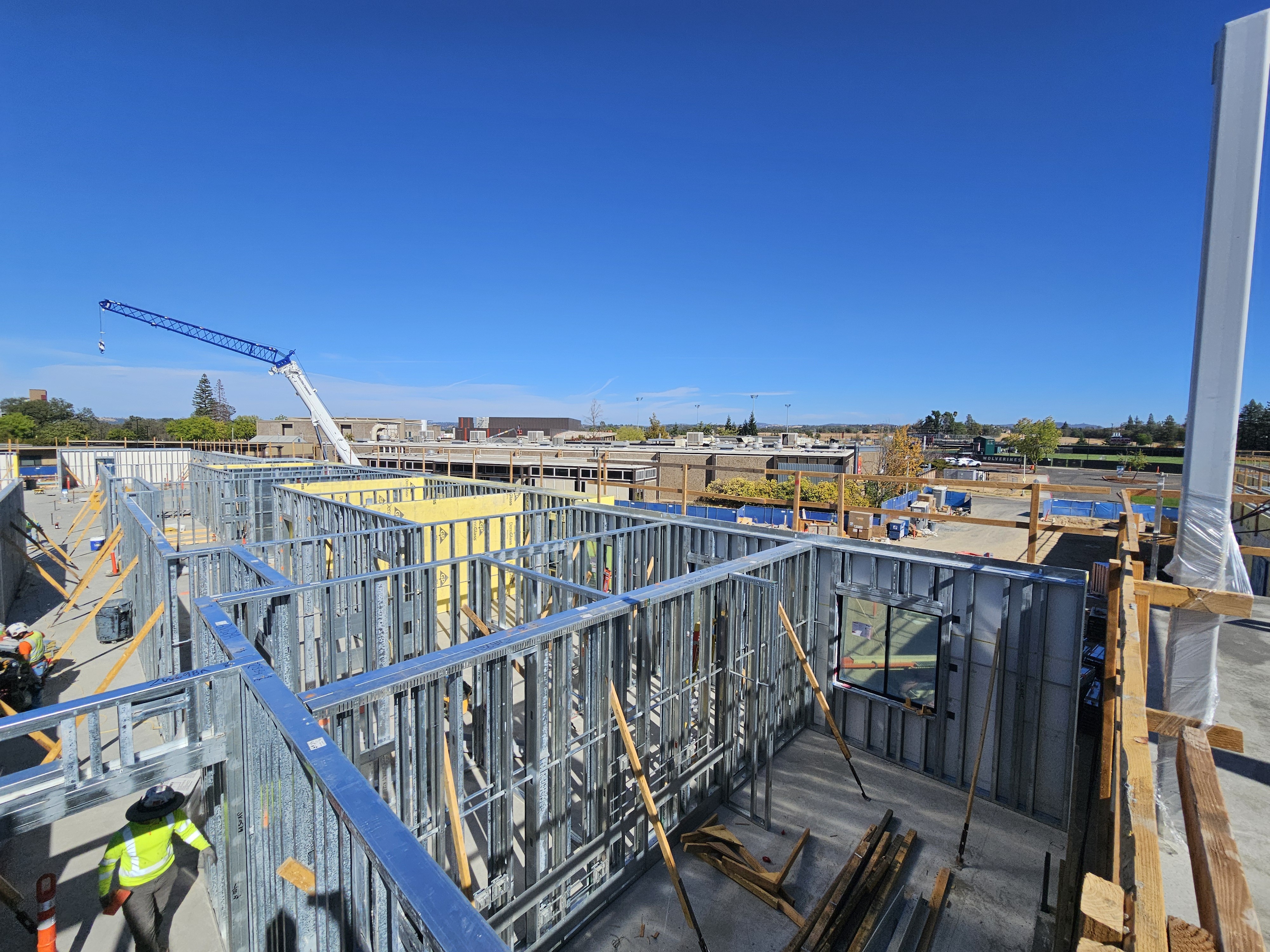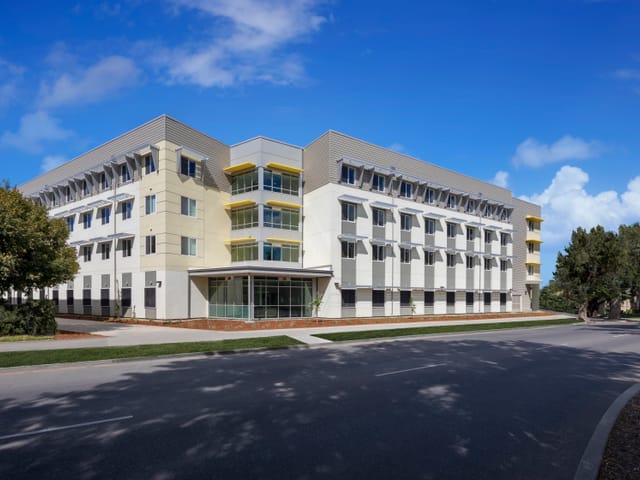

The project included the fabrication and installation of 1,800 S-Series load-bearing panels, totaling 124,000 square feet of scope for Digital Building Components (DBC). It wasn't just the scale that made this project stand out, it was the challenge of navigating new territory with the Division of the State Architect (DSA), which had never worked with prefabricated components manufactured out of state.
To move forward, DBC's QA/QC team in Phoenix teamed up with the general contractor, DPR Construction, to develop a tailored inspection protocol. After a factory tour and a deep dive into DBC's quality procedures, the DSA approved a customized approach clearing the way for prefabrication and setting a precedent for future projects.
Early planning, strong partnerships
From the start, this project was about collaboration. In early 2023, Sierra College, DPR, HKS Architects, and KPFF Structural Engineers came together with a shared goal: accelerate the timeline and get students into housing faster. As part of DPR's family of companies, SurePods and DBC offered a turnkey prefab solution that delivered speed without compromising quality. By September, the project was in full swing, with modeling and coordination underway and all stakeholders aligned.
This project is a testament to what happens when VDC, project management, and field expertise unite. From the first job trailer meeting, where every trade packed into one space to hash out expectations, to months of detailed coordination, the team leaned into early engagement. That proactive mindset helped identify challenges before they became problems and built a schedule everyone could trust.
Prefab demands more upfront coordination, but the payoff is huge: predictable schedules, reduced waste, safer job sites, and fewer surprises.
Structural Complexity and Seismic Design
With over 1,800 structural panels and 280 windows, the complexity of the design demanded a level of foresight that only prefab could offer. From the outset, the team knew that success would hinge on early coordination.
One of the most technically demanding aspects of the Sierra College build is its structural design. The project used SurePods prefabricated bathroom pods with that must integrate seamlessly with DBC's structural wall system. This required extensive coordination to ensure that all components, from Paco beams and posts to slab-on-metal-deck connections, were properly designed, fabricated, and installed.
Every panel must align precisely with plumbing, electrical, and fire safety systems. The teams used 3D modeling and virtual design and construction (VDC) tools to ensure that every connection point was accounted for, down to an eighth of an inch. This precision was critical not only for structural integrity but also for meeting ADA compliance and aesthetic requirements set by the architect and client.
The VDC team played a pivotal role in translating architectural and structural intent into buildable models. Their approach was grounded in field experience, color-coded drawings, identified fire rating requirements, and mapping out over 120 unique wall types. Their work uncovered numerous clashes between architectural and structural elements, which were resolved through hours-long coordination calls with engineers and architects. "These weren't just technical meetings, they were problem-solving sessions that often tackled one issue at a time, ensuring that every detail was addressed before fabrication began." – Adam Jones, DBC, VDC Modeler
This level of coordination extended to the sequencing of the building itself. Originally planned to be built from north to south, the team realized thanks to VDC modeling that a counterclockwise approach would be safer and more efficient due to the location of expansion joints and the need for vertical access via stairs and elevators. This pivot in strategy exemplifies the agility that prefab and VDC enable when used in tandem.