

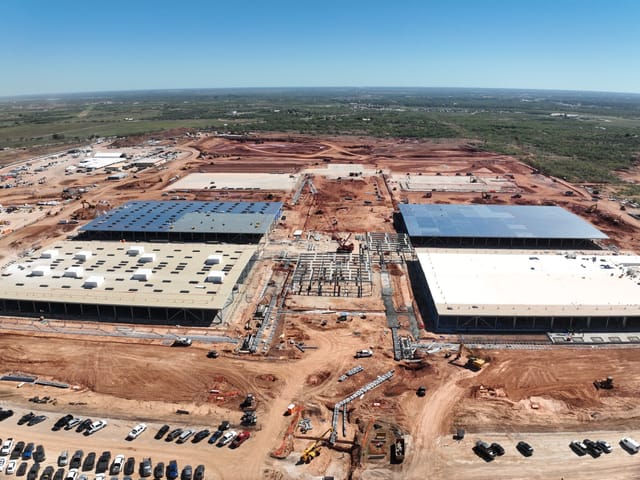
Crusoe Energy AI Data Center on Lancium Clean Campus – (read more)
DBC supported the project from its earliest concept, starting as a napkin sketch, to a fully dried-in building in under five months.

As demand for high-performance mission critical facilities continues to surge, construction teams face mounting pressure to deliver faster, safer, and greater energy efficiency. Traditional precast concrete and tilt-up methods for exterior walls often struggle to meet the speed and precision required for today’s high-tech environments. Insulated Metal Panels (IMPs) are rapidly emerging as a superior alternative for modern mission critical construction. These high performance prefabricated panels combine structure, insulation, and weather protection into a single building component, enabling faster installation, reduced on site labor, and significantly improved thermal performance with less weight to the building structure and foundations. For developers focused on accelerating speed to market, minimizing energy consumption, and enhancing long term reliability, IMPs offer a powerful and cost effective solution.
At Digital Building Components (DBC), we leverage IMP technology through precision controlled manufacturing and partnering with trusted vendors for high-quality and consistency. DBC's Panelized IMP solutions reduce embodied carbon, boost energy efficiency, and integrate seamlessly with diverse architectural visions, helping customers build smarter and faster.
In this document, we explore how DBC’s use of IMPs is driving a new era in mission critical construction, setting new benchmarks for efficiency, safety, and environmental performance across the industry.

Improves Productivity
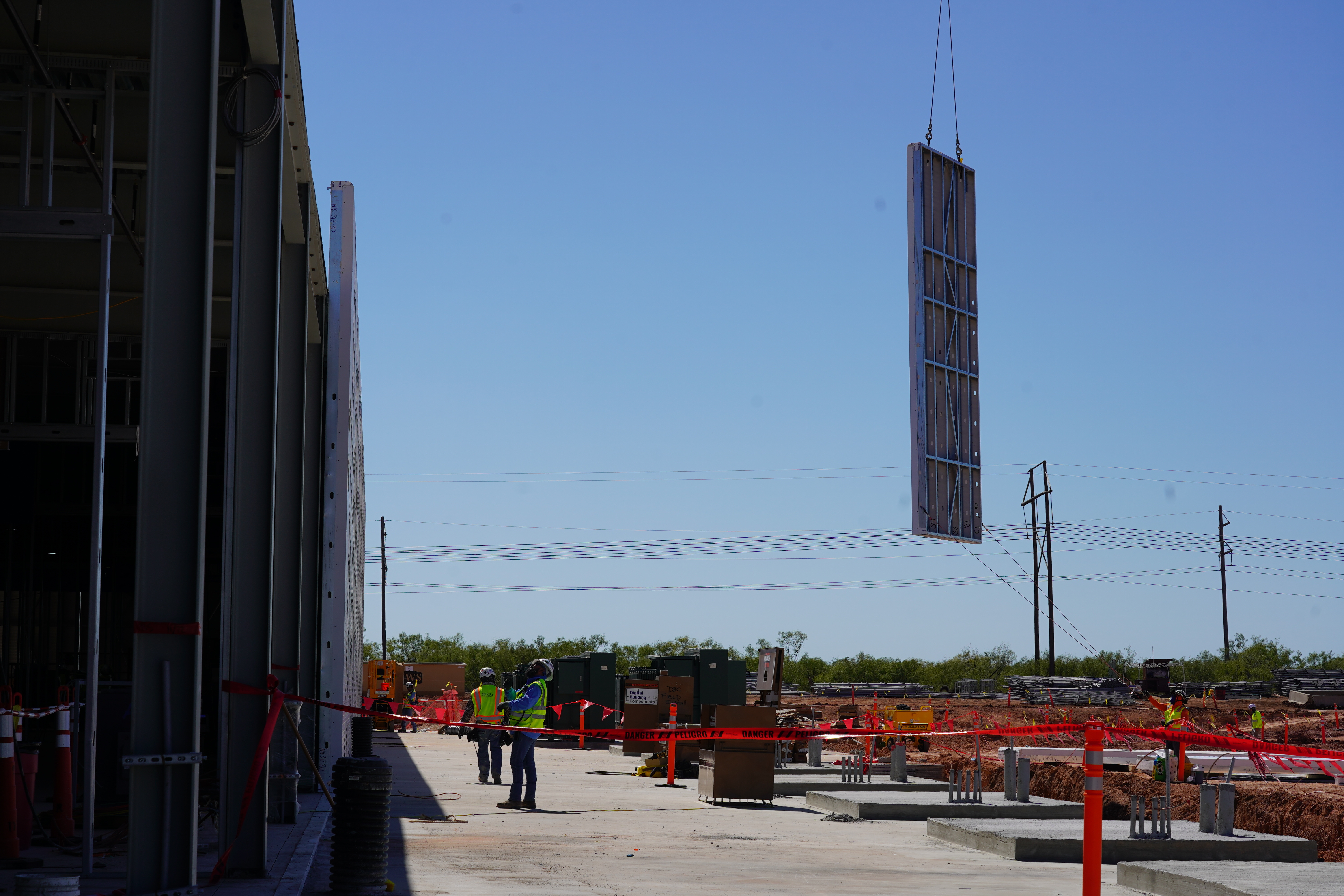
The use of prefabricated IMP’s significantly enhances productivity throughout both the manufacturing and construction phases of a project. These panels are produced off-site while site preparation is underway, enabling a parallel workflow that accelerates project timelines and reduces overall construction duration. Unlike stick-built systems that require piece-by-piece installation, prefabricated IMPs allow for a delegated design scope that includes framing, waterproofing, and exterior finishes. This streamlines coordination and reduces reliance on multiple trades. Labor efficiency is also greatly improved. What would typically require a crew of 15 to 20 workers over several months can now be completed in just a few weeks by a team of 6 to 8. Additionally, with fewer components to manage on-site and a more predictable installation process, the risk of delays due to weather, trade stacking, or material shortages is minimized.
Reduces Material Waste
Prefabricated IMP’s help reduce material waste through a combination of precise manufacturing, structural efficiency, and integrated design. As a one-piece system, it eliminates the need for multiple separate materials, reducing both the volume of materials delivered to the job site and the carbon footprint of the build. By purchasing all materials, including studs, at exact lengths, the system minimizes on-site cutting and the associated scrap that is common with Precast Concrete construction methods. Beyond the product itself, the panels’ lightweight nature allows for a potential 30% reduction in the design requirements for perimeter structures and foundations, leading to significant material savings. IMP’s also have a 2.5x R-Value compared to precast, reducing the HVAC system load reduction (reducing electricity usage, reduction in mechanical design requirements and possibly reduction of equipment) and maintenance for indoor temperature, delivering savings even after buildings open.
Decreases Construction Costs
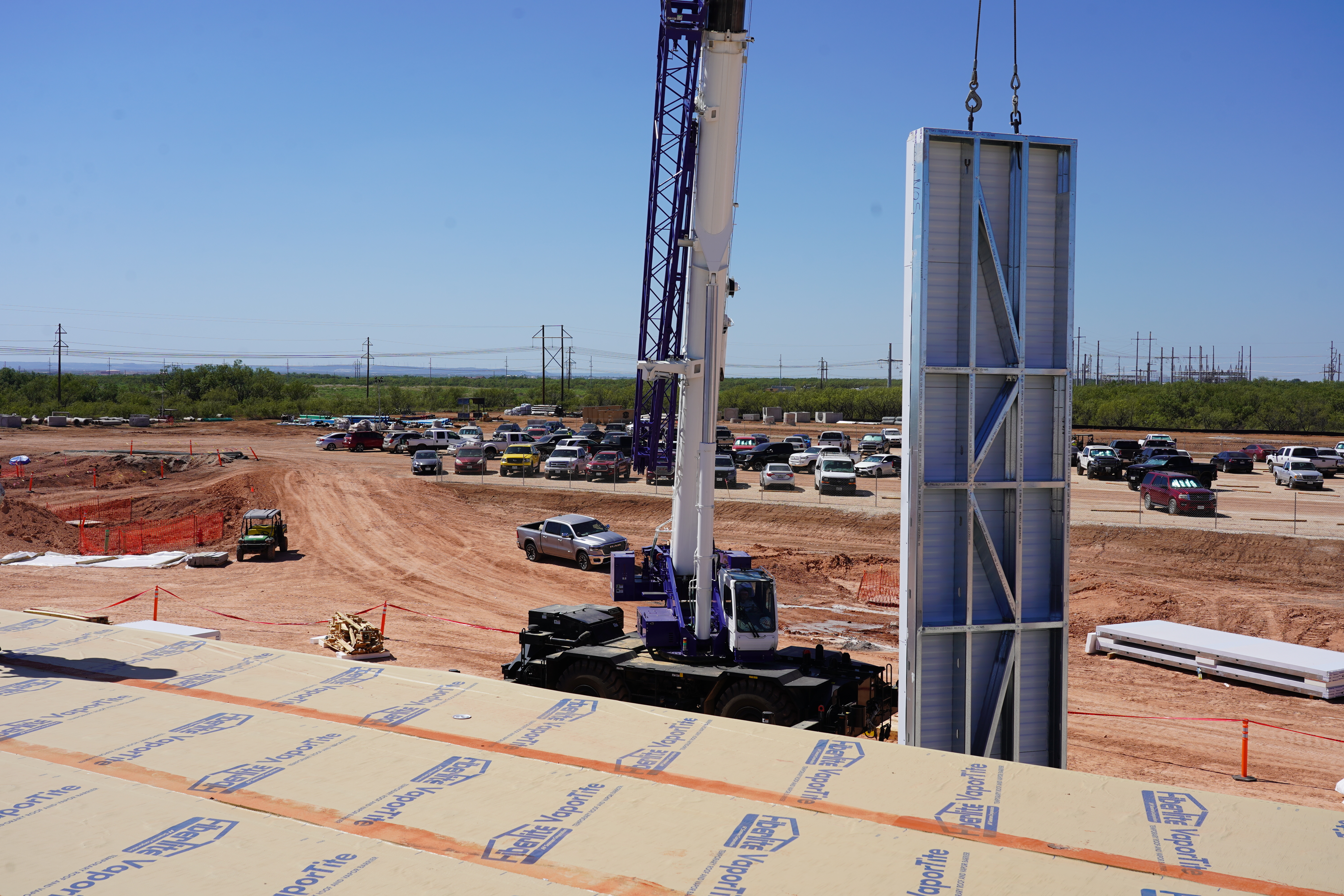
Prefabricated IMP’s contribute to reduced construction costs through faster installation, minimized material waste, and simplified construction logistics. Compared to precast concrete, IMP’s show a 3% reduction in cost,1 based on data from a 50,000 SF project in Arizona for an exterior wall thickness of 6" CFS with 2"-3" finish system dated June 2024. The panels arrive on-site ready to install, eliminating the need for multiple subcontractors and reducing labor coordination typically required with Precast concrete multi-component wall systems. Their lightweight design not only reduces the structural load on foundations, lowering foundation costs, but also enables faster installation rates. Crews are able to install 16–20 panels per day, compared to 10–15 with other prefabricated systems. This speed, enhanced by the drift track system, accelerates the building’s dry-in timeline, allowing interior trades to begin work sooner and shortening the overall construction schedule. On a recent Mission Critical project, DBC was able to meet a maximum speed of 42 panels installed in a day, turning over buildings in less than 2 weeks. By compressing project schedules, owners are able to open their projects earlier and have the ability to achieve ROI at a faster rate.
Enhances Safety
Prefabricated IMP’s are manufactured in a controlled factory environment, significantly reducing the need for on-site labor in potentially hazardous conditions. Each panel installation diverts a substantial number of labor hours away from the jobsite, minimizing worker exposure to common construction risks. Because IMPs are fabricated anywhere between 20-42 ft sections in a ground-level facility with ergonomic working heights, they require significantly less manual handling and assembly, reducing physical strain compared to Precast Concrete stick-built construction methods. The panels arrive on-site fully assembled, which minimizes material clutter, reduces interference with other trades, and streamlines logistics. This smaller on-site footprint lowers the risk of accidents and improves coordination, particularly on complex, high-tech construction projects where space and scheduling are critical.
Additionally, IMP’s are approximately seven times lighter than precast concrete, allowing for the use of smaller cranes. This not only reduces the risk associated with heavy lifting but also enhances safety during installation, especially in wind-prone or remote locations where large equipment can be difficult to operate safely.
Delivers energy-efficient buildings
The adoption of prefabricated Insulated Metal Panels significantly expands our capabilities, particularly in high-growth sectors like mission critical construction. Traditionally, mission critical facilities have relied on precast concrete for exterior walls, a method that is more labor-intensive, time-consuming, and less adaptable to the speed and thermal performance demands of modern facilities. In addition, concrete has a high embodied carbon footprint, making it less aligned with sustainability goals that environmentally conscious organizations increasingly prioritize.
By integrating IMPs into our offerings, we can now deliver high-performance, thermally efficient building envelopes that meet the stringent requirements of mission critical facilities. These panels offer superior insulation, weather proofing, and durability, making them ideal for maintaining the environmental stability vital to mission critical operations. Our one-piece airtight system allows contractors to rely on us from design to panel production to installation, reducing reliance down from multiple trade partners to one.
In short, prefabricated IMPs not only improve construction efficiency and safety but also strategically position us to take on more responsibility, deliver greater value, and expand into new markets.
Keep Reading
DBC supported the project from its earliest concept, starting as a napkin sketch, to a fully dried-in building in under five months.
42,000-sq.-ft. of sheathed exterior panels were installed in only 13 days, averaging 12 panels per day.

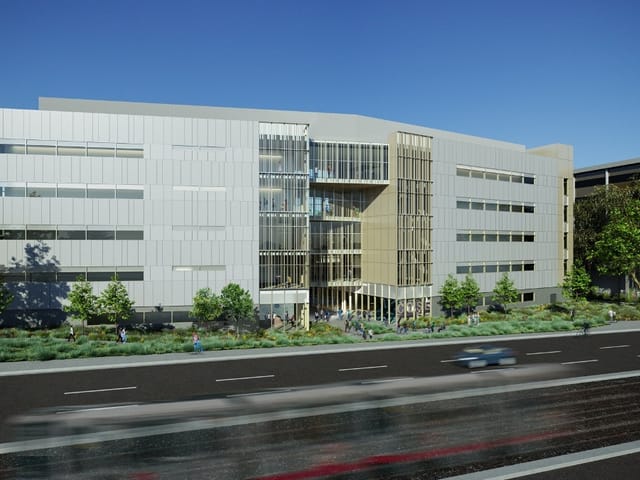
DBC manufactured and installed panelized interiors and exteriors for this world-class research facility.